
There are people we admire for what they do, others for what they represent, and a few very special people for both. For me, Chef José Andrés is one of them.
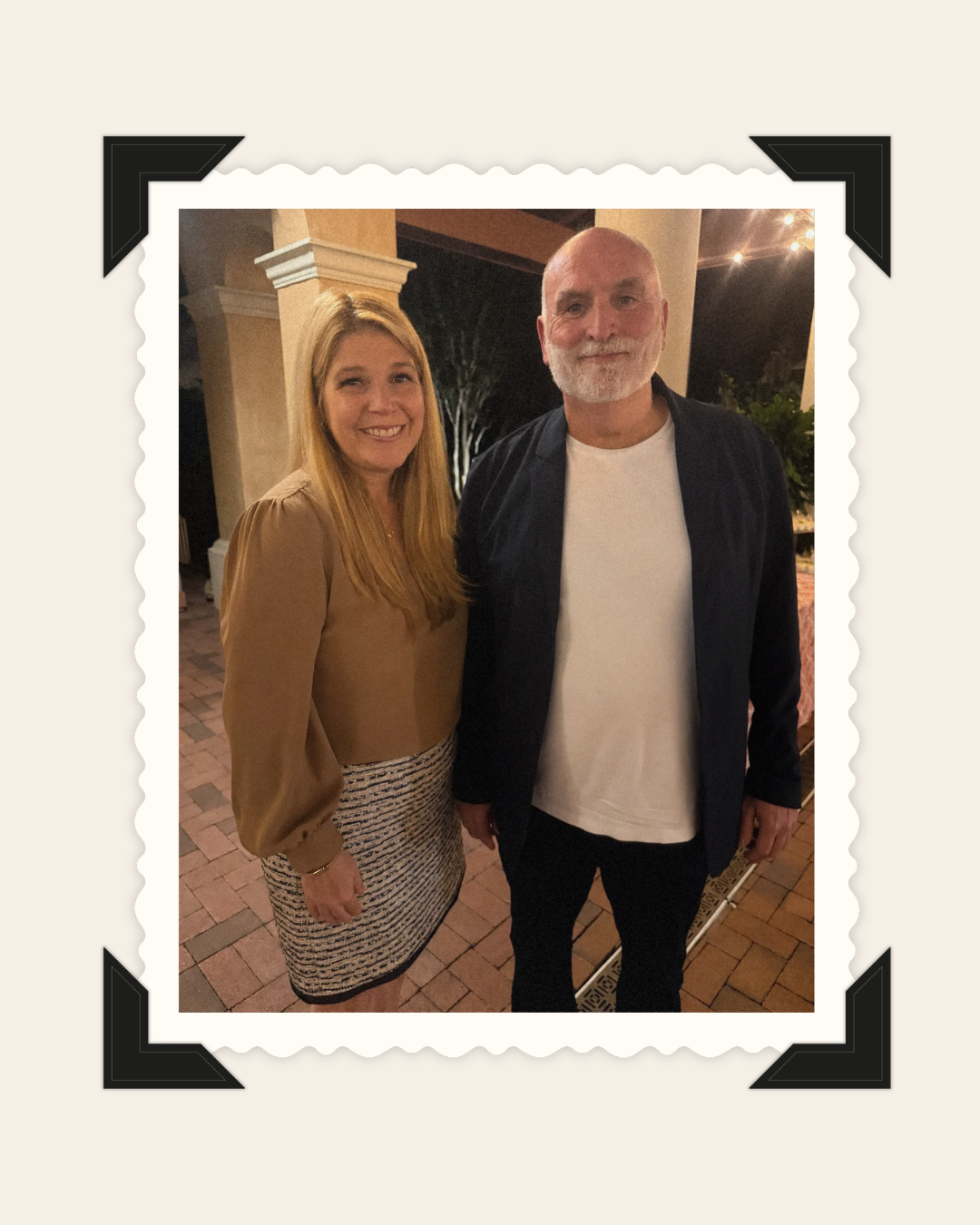
A few days ago, I had the privilege of meeting him in person. And although I must confess that I also love his food, my admiration for him began long before I ever sat down to enjoy a meal at one of his restaurants.
It began in 2017, when Hurricane Maria devastated Puerto Rico. While thousands of families struggled to survive without electricity, water, and other basic services, José Andrés came to our island to feed those who needed it most. But he did something even more important: he involved Puerto Ricans themselves in the solution, helping them organize and serve their own communities.
My parents went eight months without electricity after Maria. Eight months! So whenever I saw what José Andrés and his organization, World Central Kitchen, were doing, I couldn't help but feel a deep sense of gratitude. He didn't have to be there, but he chose to be.
Years later, during the pandemic, I remember speaking with an employee at Jaleo who expressed how grateful he was to have been able to keep his job during such uncertain times. That conversation deepened my admiration for the chef, not only as a humanitarian but also as a leader.
So you can imagine how excited I was when I finally had the opportunity to hear him speak in person.
He began by talking about his childhood and croquetas. Yes, croquetas! He shared that, growing up, they were an end-of-the-month meal in his home, something his family made when they had to make the most of whatever food was left.
I immediately thought of so many families who know what it means to stretch every last dollar, or as we say in Puerto Rico, estirar el pesito.
I connect deeply with stories like these. Perhaps because I also know what it means to come from a humble family, to work hard, and to discover that our circumstances don't have to determine how far we can go.
Then he shared a lesson from his father that I found extraordinary. When he was about 12 years old, he wanted to cook, but his father taught him that first, he needed to learn how to control the fire.
What a simple yet profound lesson!
In the kitchen, too much fire can burn the food, but too little can leave it undercooked. And I thought, how much does that resemble life?
Sometimes we let passion, emotions, or our desire to help take over, and we act without thinking about the consequences. But other times, out of fear, insecurity, or simply comfort, we don't do enough, and things are left half-cooked.
It's not about putting out the fire or allowing it to consume us. It's about learning how to use it to transform.
And then José Andrés shared a phrase that connected perfectly with that lesson:
“Doing good is not good enough. We must do smart good.”
Wow! How much sense does that make?
I immediately remembered what happened after the Pulse nightclub massacre in Orlando in 2016.
Hispanic Family Counseling was among the first organizations to respond to the mental health needs of our community. In the middle of so much pain and desperation, I came up with what I thought at the time was a wonderful idea: offering free counseling to anyone who needed it.
And that's exactly what we did.
But about a month later, I realized something I have never forgotten: we were doing good, but we weren't doing it intelligently. Our initiative, although filled with good intentions, wasn't sustainable.
Fortunately, our community stepped up. Organizations such as Hispanic Federation, Central Florida Cares, Central Florida Foundation, and United Way, among others, provided the support we needed to continue offering services.
That experience taught me that good intentions matter, but they aren't enough.
Compassion moves us to act; strategy allows us to keep going.
And as I remembered how our community came together after that tragedy, another of José Andrés's statements took on a very special meaning:
“In the worst moments of humanity, the best of humanity always shows up.”
What a powerful truth!
We saw it after Hurricane Maria. We experienced it after Pulse. We've seen it during natural disasters, pandemics, and so many other tragedies.
In the midst of suffering, there are always people willing to lend a hand, share what little they have, or simply be there for someone going through one of the most difficult moments of their life.
And that is precisely what I admire about José Andrés. He doesn't simply recognize a need and feel compassion. He looks for ways to respond, mobilize resources, involve communities, and make sure help reaches those who truly need it.
But there was another reflection during his presentation that affected me even more deeply.
While speaking about his humanitarian work in Gaza and Israel, he shared how some people questioned why he was helping the other side of the conflict.
As he explained it, when people asked why he went to Israel, his answer was that there were people there who needed help. And when they asked why he went to Gaza, his answer was exactly the same.
Finally, when asked whose side he was on, his answer was as simple as it was powerful:
On the side of humanity.
Wow! What an answer!
In a world where we are constantly pressured to choose sides, where political, religious, and cultural differences seem to divide us more every day, what would happen if we began by recognizing our shared humanity?
At what point did we allow our differences to determine who deserves our compassion?
We don't have to agree with another person's beliefs, decisions, or ideologies to recognize their suffering.
Human suffering should have no nationality, religion, or political affiliation. And compassion, even less so.
But listening to José Andrés also made me reflect on something more personal: our responsibility to act.
During his presentation, he shared how, when faced with the suffering of so many people, he found himself wondering why he hadn't done something.
And that question stayed with me.
Because it's easy to admire people who do extraordinary things, but how often do we stop to think about what we could be doing?
We don't need to be José Andrés to make a difference. Not all of us have his resources, his platform, or his ability to mobilize thousands of people. But we all have something to offer.
He reminded us that it all begins with one meal at a time.
One meal. One person. One action.
Sometimes we want to change the world, and we feel overwhelmed because we don't know where to begin. We think that making a difference requires us to do something extraordinary.
But what if we started with the ordinary?
With that person who needs someone to listen. With the neighbor who is alone. With the family going through a crisis. With someone we can reach out to without expecting anything in return.
And if there is one thing I took away from that conversation, it's that wanting to help isn't enough. We have to dare to act, but we also have to think about how to make our actions create lasting change.
I left that experience admiring José Andrés even more, but also questioning myself.
Because admiration can inspire us, but it is our actions that can transform lives.
And today, I want to leave you with two questions:
What are you not doing with the resources you already have?
And perhaps more importantly:
When humanity needs you, which side will you choose to be on?
We are living in times when wars, divisions, prejudice, and discrimination seem to take up more and more space in our lives. Times when it has become far too easy to point out our differences and far too difficult to recognize what connects us.
But we cannot allow our differences to make us forget our humanity.
Perhaps we will never have to feed thousands of people or respond to a global tragedy. But every day, we have opportunities to make a difference.
Sometimes all it takes is listening, extending a hand, or simply recognizing the dignity of someone who thinks, believes, or lives differently from us.
And perhaps that is where the best of humanity begins: when we stop asking who is going to do something and decide that we can be that someone.
Because in a world that seems determined to divide us, my hope is that we follow José Andrés's example and choose, every single day, to stand on the side of humanity.
by: Dr. Denisse Centeno Lamas, DSW, LCSW-QS